


Page 51 - phytotherapy_ EBOOK_2025
P. 51
Ginger

Definition
It is the dried rhizome of Zingiber officinale Roscoe (Zingiberaceae).
Chemical constituents
The rhizome contains 1–4% essential oil and an oleoresin.
The chief constituent of the oil is the sesquiterpene hydrocarbons (-)-zingiberene, (+)-ar-
curcumene. Monoterpene aldehydes and alcohols are also present.
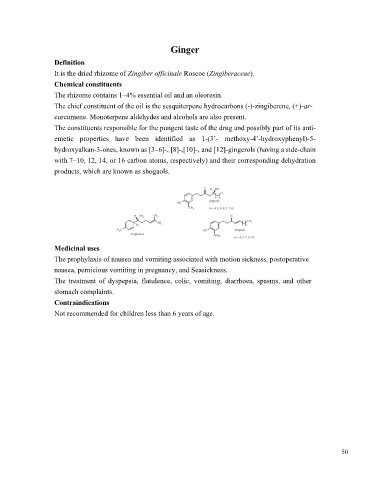
The constituents responsible for the pungent taste of the drug and possibly part of its anti-
emetic properties have been identified as 1-(3’- methoxy-4’-hydroxyphenyl)-5-
hydroxyalkan-3-ones, known as [3–6]-, [8]-,[10]-, and [12]-gingerols (having a side-chain
with 7–10, 12, 14, or 16 carbon atoms, respectively) and their corresponding dehydration
products, which are known as shogaols.

Medicinal uses
The prophylaxis of nausea and vomiting associated with motion sickness, postoperative
nausea, pernicious vomiting in pregnancy, and Seasickness.
The treatment of dyspepsia, flatulence, colic, vomiting, diarrhoea, spasms, and other
stomach complaints.
Contraindications
Not recommended for children less than 6 years of age.

                                                                                                                                  50

