


Page 221 - Handout Computer Network.
P. 221
Computer Network                                                             2026


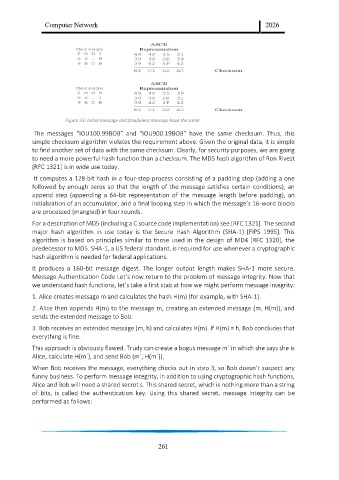
                        Figure 33: Initial message and fraudulent message have the same

             The  messages  “IOU100.99BOB”  and  “IOU900.19BOB”  have  the  same  checksum.  Thus,  this
            simple checksum algorithm violates the requirement above. Given the original data, it is simple
            to find another set of data with the same checksum. Clearly, for security purposes, we are going
            to need a more powerful hash function than a checksum. The MD5 hash algorithm of Ron Rivest
            [RFC 1321] is in wide use today.
             It computes a 128-bit hash in a four-step process consisting of a padding step (adding a one
            followed by enough zeros so that the length of the message satisfies certain conditions), an
            append  step  (appending  a  64-bit  representation  of  the  message  length  before  padding),  an
            initialization of an accumulator, and a final looping step in which the message’s 16-word blocks
            are processed (mangled) in four rounds.
            For a description of MD5 (including a C source code implementation) see [RFC 1321]. The second
            major  hash  algorithm  in  use  today  is  the  Secure  Hash  Algorithm  (SHA-1)  [FIPS  1995].  This
            algorithm is based on principles similar to those used in the design of MD4 [RFC 1320], the
            predecessor to MD5. SHA-1, a US federal standard, is required for use whenever a cryptographic
            hash algorithm is needed for federal applications.
            It  produces  a  160-bit  message  digest.  The  longer  output  length  makes  SHA-1  more  secure.
            Message Authentication Code Let’s now return to the problem of message integrity. Now that
            we understand hash functions, let’s take a first stab at how we might perform message integrity:
            1. Alice creates message m and calculates the hash H(m) (for example, with SHA-1).

            2. Alice then appends H(m) to the message m, creating an extended message (m, H(m)), and
            sends the extended message to Bob.
            3. Bob receives an extended message (m, h) and calculates H(m). If H(m) = h, Bob concludes that
            everything is fine.

            This approach is obviously flawed. Trudy can create a bogus message m´ in which she says she is
            Alice, calculate H(m´), and send Bob (m´, H(m´)).
            When Bob receives the message, everything checks out in step 3️, so Bob doesn’t suspect any
            funny business. To perform message integrity, in addition to using cryptographic hash functions,
            Alice and Bob will need a shared secret s. This shared secret, which is nothing more than a string
            of  bits,  is  called  the  authentication  key.  Using  this  shared  secret,  message  integrity  can  be
            performed as follows:


                                                         261

