


Page 395 - American Stories, A History of the United States
P. 395
prohibited from voting for delegates to the constitutional conventions or in the elections
            16.1                                to ratify the conventions’ work. Since blacks could participate in this process, Republi-
                                                cans thought they had ensured that “loyal” men would dominate the new governments.
                                                Radical Reconstruction was based on the dubious assumption that once blacks had the
            16.2                                vote, they would be able to protect themselves against white supremacists’ efforts to
                                                deny them their rights. The Reconstruction Acts thus signaled a retreat from the true
                                                Radical position that sustained federal authority was needed to complete the transition

            16.3                                from slavery to freedom and prevent the resurgence of the South’s old ruling class Most
                                                Republicans were unwilling to embrace centralized government and an extended period
                                                of military rule over civilians. Yet a genuine spirit of democratic idealism did give legiti-
                     Quick Check                macy and fervor to the cause of black male suffrage. Enabling people who were so poor
            16.4
                     What was “Radical Reconstruction”,   and downtrodden to have access to the ballot box was a bold and innovative application
                     and how did it differ from previous   of the principle of government by the consent of the governed. The problem was enforc-
                     plans?                     ing equal suffrage under conditions then existing in the postwar South.


                                                the impeachment Crisis
                                                The first obstacle to enforcing Congressional Reconstruction was resistance from
                                                the White House. Johnson sought to thwart the will of Congress by obstructing the
                                                plan. He dismissed officeholders who sympathized with Radical Reconstruction and


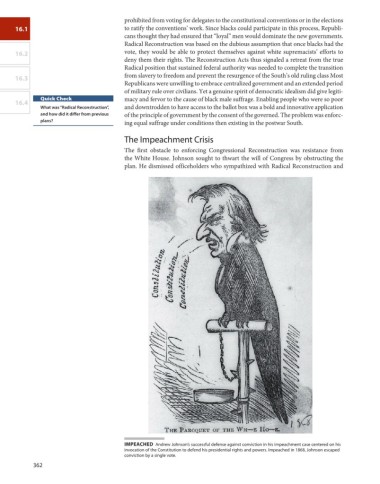
                                                ImPeaCHeD  Andrew Johnson’s successful defense against conviction in his impeachment case centered on his
                                                invocation of the Constitution to defend his presidential rights and powers. impeached in 1868, Johnson escaped
                                                conviction by a single vote.
                  362

