


Page 119 - phytochemistry I - PharmD Clinical
P. 119
CH2O H      CH2OH
                 O

 O-glucose  HOH2C
Salicin
                   Saliretin

Pharmacokinetics of salicin:

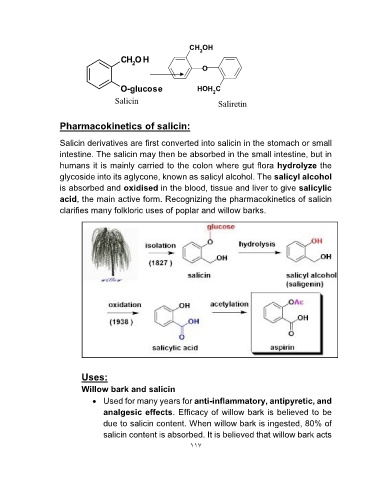
Salicin derivatives are first converted into salicin in the stomach or small
intestine. The salicin may then be absorbed in the small intestine, but in
humans it is mainly carried to the colon where gut flora hydrolyze the
glycoside into its aglycone, known as salicyl alcohol. The salicyl alcohol
is absorbed and oxidised in the blood, tissue and liver to give salicylic
acid, the main active form. Recognizing the pharmacokinetics of salicin
clarifies many folkloric uses of poplar and willow barks.

Uses:

Willow bark and salicin
   • Used for many years for anti-inflammatory, antipyretic, and
       analgesic effects. Efficacy of willow bark is believed to be
       due to salicin content. When willow bark is ingested, 80% of
       salicin content is absorbed. It is believed that willow bark acts

                                             ۱۱۷

