


Page 127 - phytochemistry I - PharmD Clinical
P. 127
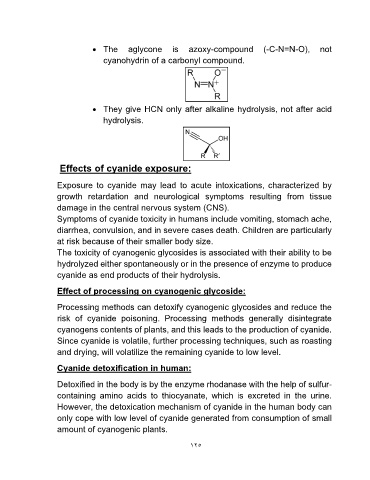
• The aglycone is azoxy-compound (-C-N=N-O), not
                cyanohydrin of a carbonyl compound.

            • They give HCN only after alkaline hydrolysis, not after acid
                hydrolysis.

Effects of cyanide exposure:

Exposure to cyanide may lead to acute intoxications, characterized by
growth retardation and neurological symptoms resulting from tissue
damage in the central nervous system (CNS).
Symptoms of cyanide toxicity in humans include vomiting, stomach ache,
diarrhea, convulsion, and in severe cases death. Children are particularly
at risk because of their smaller body size.
The toxicity of cyanogenic glycosides is associated with their ability to be
hydrolyzed either spontaneously or in the presence of enzyme to produce
cyanide as end products of their hydrolysis.
Effect of processing on cyanogenic glycoside:
Processing methods can detoxify cyanogenic glycosides and reduce the
risk of cyanide poisoning. Processing methods generally disintegrate
cyanogens contents of plants, and this leads to the production of cyanide.
Since cyanide is volatile, further processing techniques, such as roasting
and drying, will volatilize the remaining cyanide to low level.
Cyanide detoxification in human:
Detoxified in the body is by the enzyme rhodanase with the help of sulfur‐
containing amino acids to thiocyanate, which is excreted in the urine.
However, the detoxication mechanism of cyanide in the human body can
only cope with low level of cyanide generated from consumption of small
amount of cyanogenic plants.

                                                       ۱۲٥

