


Page 126 - phytochemistry I - PharmD Clinical
P. 126
2. Vanillin is used in the fragrance industry, in perfumes, and to mask
       unpleasant odors or tastes in medicines, livestock fodder, and
       cleaning products.

   3. Vanillin can be used as a stain for developing thin layer
       chromatography plates to aid in visualizing components of
       a reaction mixture. This stain yields a range of colors for these
       different components. Vanillin–HCl staining can be used to visualize
       the localization of tannins in cells.

                     Cyanogenic glycosides

Cyanogenic glycosides are a group of nitrile‐containing plant secondary
compounds that yields hydrocyanic acid (cyanogenesis) following their
enzymatic breakdown. These glycosides are considered natural plant
toxins that are present in several plants, most of which are consumed by
humans.
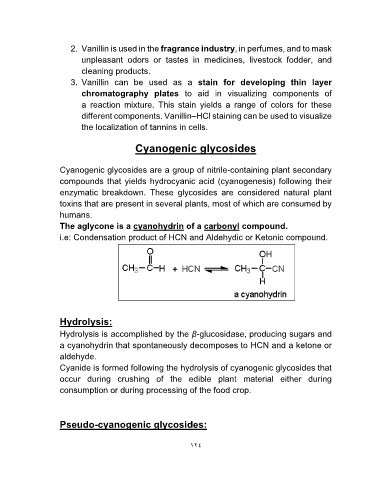
The aglycone is a cyanohydrin of a carbonyl compound.
i.e: Condensation product of HCN and Aldehydic or Ketonic compound.

Hydrolysis:

Hydrolysis is accomplished by the β‐glucosidase, producing sugars and
a cyanohydrin that spontaneously decomposes to HCN and a ketone or
aldehyde.
Cyanide is formed following the hydrolysis of cyanogenic glycosides that
occur during crushing of the edible plant material either during
consumption or during processing of the food crop.

Pseudo-cyanogenic glycosides:

                                                      ۱۲٤

