


Page 131 - phytochemistry I - PharmD Clinical
P. 131
Hydrolysis:

Upon hydrolysis, they yield a genin of thiocyanate structure (mustard oil).
Thioglycosdies are predominantly metabolized to reactive
isothiocyanates (mustard oils), which impart the mustard-like or garlic-
like odors associated with mustard and horseradish.

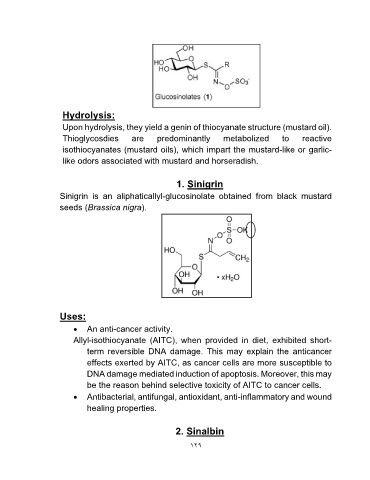
                                    1. Sinigrin

Sinigrin is an aliphaticallyl-glucosinolate obtained from black mustard
seeds (Brassica nigra).

Uses:

    • An anti-cancer activity.
    Allyl-isothiocyanate (AITC), when provided in diet, exhibited short-

         term reversible DNA damage. This may explain the anticancer
         effects exerted by AITC, as cancer cells are more susceptible to
         DNA damage mediated induction of apoptosis. Moreover, this may
         be the reason behind selective toxicity of AITC to cancer cells.
    • Antibacterial, antifungal, antioxidant, anti-inflammatory and wound
         healing properties.

                                    2. Sinalbin

                                                      ۱۲۹

