


Page 151 - Handout of Computer Architecture (1)..
P. 151
result using two or more instructions. To avoid these problems, two criteria were used in designing the
               VAX instruction format [STRE78]:

               1. All instructions should have the “natural” number of operands.

               2. All operands should have the same generality in specification.


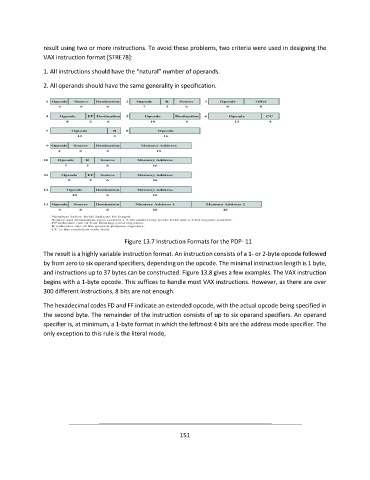
                                          Figure 13.7 Instruction Formats for the PDP- 11

               The result is a highly variable instruction format. An instruction consists of a 1- or 2-byte opcode followed
               by from zero to six operand specifiers, depending on the opcode. The minimal instruction length is 1 byte,
               and instructions up to 37 bytes can be constructed. Figure 13.8 gives a few examples. The VAX instruction
               begins with a 1-byte opcode. This suffices to handle most VAX instructions. However, as there are over
               300 different instructions, 8 bits are not enough.
               The hexadecimal codes FD and FF indicate an extended opcode, with the actual opcode being specified in
               the second byte. The remainder of the instruction consists of up to six operand specifiers. An operand
               specifier is, at minimum, a 1-byte format in which the leftmost 4 bits are the address mode specifier. The
               only exception to this rule is the literal mode,


                                                             151

