


Page 204 - Handout of Computer Architecture (1)..
P. 204
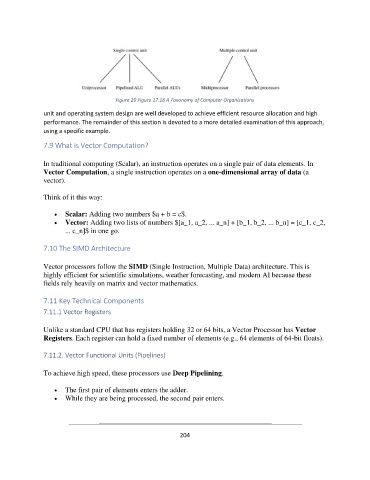
Figure 20 Figure 17.18 A Taxonomy of Computer Organizations

               unit and operating system design are well developed to achieve efficient resource allocation and high
               performance. The remainder of this section is devoted to a more detailed examination of this approach,
               using a specific example.

               7.9 What is Vector Computation?


               In traditional computing (Scalar), an instruction operates on a single pair of data elements. In
               Vector Computation, a single instruction operates on a one-dimensional array of data (a
               vector).


               Think of it this way:

                   •  Scalar: Adding two numbers $a + b = c$.
                   •  Vector: Adding two lists of numbers $[a_1, a_2, ... a_n] + [b_1, b_2, ... b_n] = [c_1, c_2,
                       ... c_n]$ in one go.

               7.10 The SIMD Architecture


               Vector processors follow the SIMD (Single Instruction, Multiple Data) architecture. This is
               highly efficient for scientific simulations, weather forecasting, and modern AI because these
               fields rely heavily on matrix and vector mathematics.

               7.11 Key Technical Components

               7.11.1 Vector Registers

               Unlike a standard CPU that has registers holding 32 or 64 bits, a Vector Processor has Vector
               Registers. Each register can hold a fixed number of elements (e.g., 64 elements of 64-bit floats).


               7.11.2. Vector Functional Units (Pipelines)

               To achieve high speed, these processors use Deep Pipelining.


                   •  The first pair of elements enters the adder.
                   •  While they are being processed, the second pair enters.


                                                             204

