


Page 205 - Candi Indonesia (Jawa)
P. 205
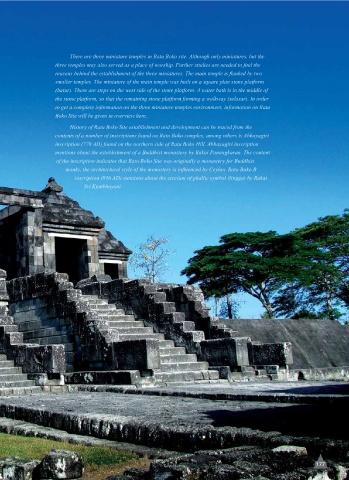
There are three miniature temples in Ratu Boko site. Although only miniatures, but the
                       WKUHH WHPSOHV PD\ DOVR VHUYHG DV D SODFH RI ZRUVKLS  )XUWKHU VWXGLHV DUH QHHGHG WR ¿QG WKH
                       UHDVRQV EHKLQG WKH HVWDEOLVKPHQW RI WKH WKUHH PLQLDWXUHV  7KH PDLQ WHPSOH LV ÀDQNHG E\ WZR
                       smaller temples. The miniature of the main temple was built on a square plan stone platform
                       (batur). There are steps on the west side of the stone platform. A water bath is in the middle of
                       the stone platform, so that the remaining stone platform forming a walkway (selasar). In order
                       to get a complete information on the three miniature temples environment, information on Ratu
                       Boko Site will be given in overview here.

                            History of Ratu Boko Site establishment and development can be traced from the
                       contents of a number of inscriptions found on Ratu Boko complex, among others is Abhayagiri
                       inscription (778 AD) found on the northern side of Ratu Boko Hill. Abhayagiri inscription
                       mentions about the establishment of a Buddhist monastery by Rakai Panangkaran. The content
                       of the inscription indicates that Ratu Boko Site was originally a monastery for Buddhist
                           PRQNV  WKH DUFKLWHFWXUDO VW\OH RI WKH PRQDVWHU\ LV LQÀXHQFHG E\ &H\ORQ  5DWX %RNR %
                              inscription (856 AD) mentions about the erection of phallic symbol (lingga) by Rakai

                                  Sri Kumbhayoni.


                                                                                                                            177

