


Page 162 - 72193
P. 162
166
 גי קרפ
                                              th
 םייח ץפח
 Chafetz Chayim  .הרָוֹתּ דֹמְלִל רֶפֵסַּה  הרימשה תבוח סרטנוק  !?הרָוֹתַּה תקַָזְחַה ידְֵי לַע וּנְיַהְדּ ,שָׁדָחֵמ  .הרָוֹתַּה תוּכְז םֶהָל ןיֵאֶשׁ ירֲֵחַא ,הָלוֹדְגּ הָנָכַּסְבּ םֵה םָפוּגְל   וֹתוֹיֲחַהְל רֹזֲחַל הָצֵע שֵׁקַּבְתּ אלֹ ךְיֵאְו ,תוּמָל םָדָא לָכּ ףוֹס   יִכּ ,ףוֹסַּבְל הֶלְכִי יאַדַּוְבֶּשׁ ךְָפוּגּ ,ןֵכּ םִאְו .
  Kuntres Chovat HaShemirah      הרימשה תבוח סרטנוק
 14  chapter                             י קרפ
 th
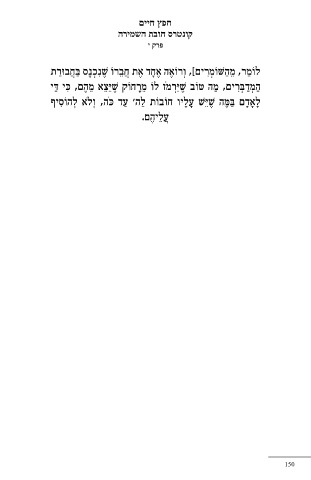
 is to aggrieve him, similar to what is written in Sefer Chafetz    תרַוּבֲחַבּ סָנְכִנֶשׁ וֹרֵבֲח תֶא דָחֶא הֶאוֹרְו ,]םירְִמוֹשַּׁהֵמ ,רַמוֹל
 Chayim regarding Lashon Hara (in the 1st and 9th Kelalim) and
 Rechilut (in the 8th Kelal).   יַדּ יִכּ ,םֶהֵמ אֵצֵיֶּשׁ קוֹחרֵָמ וֹל זֹמרְִיֶּשׁ בוֹטּ הַמ ,םירְִבּדְַמַה
 Chazal have additionally said that the pasuk (Vayikrah 25:18)    ףיִסוֹהְל אלְֹו ,ה ֹּכ דַע 'הַל תוֹבוֹח ויָלָע שֵׁיֶּשׁ הֶמַּבּ םָדָאָל
 “You shall not oppress \ abuse your fellow Jew” means that if he   .םֶהיֵלֲע
 is with you in Torah and mitzvot you may not abuse him, implying
 that if someone who has left the path or Torah there is no esur
 of directing at him words that are oppressive \ abusive since this
 person is not categorized as “your fellow Jew” in this regard.  But
 seemingly this is only relevant when the person who strayed is
 continuing to commit sins that are well known throughout Jewish
 society to be sinful and he has totally repudiated these laws.  But
 regarding an average person, someone who is included in the
 category of “your fellow Jew,” the Lav of “oppressive things”
 does apply since that Lav is relevant to everyone, even if they are
 not on the same level of observance as the speaker.  The Tanna
 of the Mishnah in Avot (4:3) taught this concept when he said
 “Do not be scornful of any person,” and included in this category
 are both someone who is a Chacham and someone who is an
 unlearned person, as long as he has not repudiated those things
 that are forbidden by the Torah.  Furthermore, they have said
 (Gemara Nedarim 81a) regarding those who refer to unlearned
 people as “donkeys” that there will usually not be found among
 their children people who are Talmidei Chachamim.  And the
 Sefer Avot DeRebbe Natan (17:4) relates that one may not say
 “I like this Jew and I hate this Jew, I love the Chachamim and I
 dislike unlearned people.  But rather one should say that I love
 everyone and hate those heretical Jews who twist and misrepresent
 Hashem’s Torah.”  Thus David HaMelech says (Tehilim 139:21)
 “Those that hate You I shall hate and those that fight against You
 I will fight.”
 Therefore one must be very careful if he employs a servant or
 maid  not  to  humiliate  them,  Gd  forbid,  especially  if  they  are
 widows  or  orphans.    But  if  someone  violated  these  laws  and
 aggrieved someone, one must apologize \ appease the victim, as
 Chazal bring this down in the 7  perek of Gemara Yomah.
 th


 179  178  די קרפ  *  *  *  םייח ץפח  הרימשה תבוח סרטנוק  .'ז קרֶֶפּ אָמוֹיְבּ אָתיִאדְִכּ  ."'וֹגְו טָטוֹקְתֶא ךָיֶמְמוֹקְתִבוּ   ,וֹסְיַּפְל ךְירִָצ ,םָדָא הֶזיֵא טיִנקְִה וֹא רַבָע םִאְו .םיִמוֹתְי   וֹא תוֹנָמְלַא םֵה םִא טרְָפִבוּ ,םוֹלָשְׁו סַח ,םָתוֹזַּבְל אלֶֹּשׁ   ,תוֹתרְָשְׁמ וֹא םיִתרְָשְׁמ וֹל שֵׁיֶּשׁ יִמ ,דֹאְמ רֵהָז

