


Page 116 - Handout Digital Electronics
P. 116
The SR flip flop state diagram


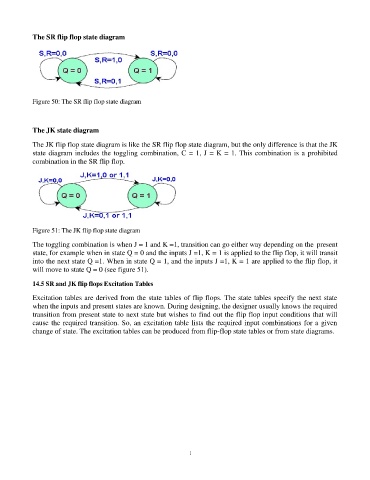
            Figure 50: The SR flip flop state diagram


            The JK state diagram

            The JK flip flop state diagram is like the SR flip flop state diagram, but the only difference is that the JK
            state diagram includes the toggling combination, C = 1, J = K = 1. This combination is a  prohibited
            combination in the SR flip flop.


            Figure 51: The JK flip flop state diagram

            The toggling combination is when J = 1 and K =1, transition can go either way depending on the  present
            state, for example when in state Q = 0 and the inputs J =1, K = 1 is applied to the flip flop, it will transit
            into the next state Q =1. When in state Q = 1, and the inputs J =1, K = 1 are applied to the flip flop, it
            will move to state Q = 0 (see figure 51).

            14.5 SR and JK flip flops Excitation Tables
            Excitation tables are derived from the state tables of flip flops. The state tables specify the next state
            when the inputs and present states are known. During designing, the designer usually knows the required
            transition from present state to next state but wishes to find out the flip flop input conditions that will
            cause the required transition. So, an excitation table lists the required input combinations for a given
            change of state. The excitation tables can be produced from flip-flop state tables or from state diagrams.


                                                                116

