


Page 39 - phytotherapy_ EBOOK_2025
P. 39
Castor oil

Definition
It is the fixed oil obtained by cold expression from the seeds of Ricinus communis L.
(Euphorbiaceae).
Chemical constituents
The major chemical constituents of the oil are triacyl glycerols containing an unsaturated
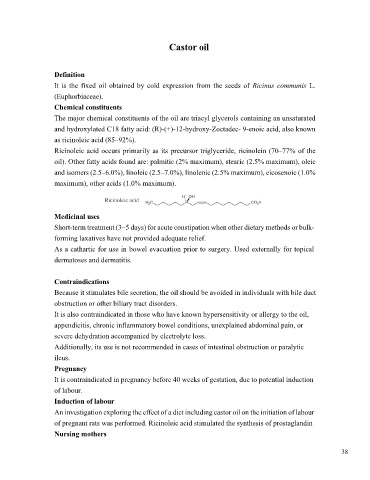
and hydroxylated C18 fatty acid: (R)-(+)-12-hydroxy-Zoctadec- 9-enoic acid, also known
as ricinoleic acid (85–92%).
Ricinoleic acid occurs primarily as its precursor triglyceride, ricinolein (70–77% of the
oil). Other fatty acids found are: palmitic (2% maximum), stearic (2.5% maximum), oleic
and isomers (2.5–6.0%), linoleic (2.5–7.0%), linolenic (2.5% maximum), eicosenoic (1.0%
maximum), other acids (1.0% maximum).

Medicinal uses
Short-term treatment (3–5 days) for acute constipation when other dietary methods or bulk-
forming laxatives have not provided adequate relief.
As a cathartic for use in bowel evacuation prior to surgery. Used externally for topical
dermatoses and dermatitis.

Contraindications
Because it stimulates bile secretion, the oil should be avoided in individuals with bile duct
obstruction or other biliary tract disorders.
It is also contraindicated in those who have known hypersensitivity or allergy to the oil,
appendicitis, chronic inflammatory bowel conditions, unexplained abdominal pain, or
severe dehydration accompanied by electrolyte loss.
Additionally, its use is not recommended in cases of intestinal obstruction or paralytic
ileus.
Pregnancy
It is contraindicated in pregnancy before 40 weeks of gestation, due to potential induction
of labour.
Induction of labour
An investigation exploring the effect of a diet including castor oil on the initiation of labour
of pregnant rats was performed. Ricinoleic acid stimulated the synthesis of prostaglandin
Nursing mothers

                                                                                                  38

