


Page 337 - Ranah Studi Agraria: Penguasaan Tanah dan Hubungan Agraris
P. 337
Ranah Studi Agraria

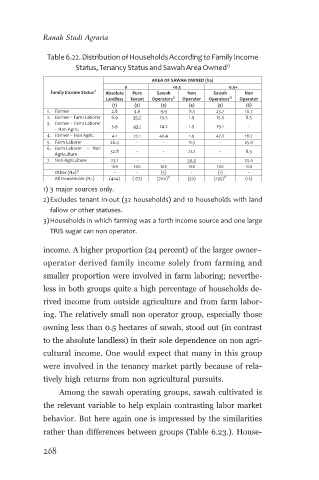
             Table 6.22. Distribution of Households According to Family Income
                    Status, Tenancy Status and Sawah Area Owned 1)
                                       AREA OF SAWAH OWNED (ha)
                                0           <0.5          0.5+
              Family Income Status 1)  Absolute  Pure  Sawah  Non  Sawah  Non
                           Landless  Tenant  Operators 2)  Operator  Operators 2)  Operator
                             (1)  (2)    (3)    (4)    (5)    (6)
             1.  Farmer      2.8  4.0    9.9    11.5   23.7   16.7
             2. Farmer – Farm Laborer  6.9  30.7  23.5  1.9  15.5  8.3
             3. Farmer – Farm Laborer  3.9  43.1  24.2  1.9  19.1  -
               – Non Agric.
             4. Farmer – Non Agric.  4.1  22.1  42.4  1.9  47.7  16.7
             5. Farm Laborer  26.4  -     -     11.5    -     25.0
             6. Farm Laborer  – Non  32.8  -  -  21.2   -     8.3
               Agriculture
             7. Non Agriculture  23.1  -  -     50.0    -     25.0
                             100  100    100    100    100    100
                    3)
               Other (N=)    -     -     (5)     -     (1)     -
               All Households (N=)  (404)  (177)  (700) 2)  (52)  (195) 2)  (12)
            1) 3 major sources only.
            2)Excludes tenant in-out (32 households) and 10 households with land
             fallow or other statuses.
            3)Households in which farming was a forth income source and one large
             TRIS sugar can non operator.

            income. A higher proportion (24 percent) of the larger owner–
            operator derived family income solely from farming and
            smaller proportion were involved in farm laboring; neverthe-
            less in both groups quite a high percentage of households de-
            rived income from outside agriculture and from farm labor-
            ing. The relatively small non operator group, especially those
            owning less than 0.5 hectares of sawah, stood out (in contrast
            to the absolute landless) in their sole dependence on non agri-
            cultural income. One would expect that many in this group
            were involved in the tenancy market partly because of rela-
            tively high returns from non agricultural pursuits.
                Among the sawah operating groups, sawah cultivated is
            the relevant variable to help explain contrasting labor market
            behavior. But here again one is impressed by the similarities
            rather than differences between groups (Table 6.23.). House-

            268

