


Page 118 - Handout of Computer Architecture (1)..
P. 118
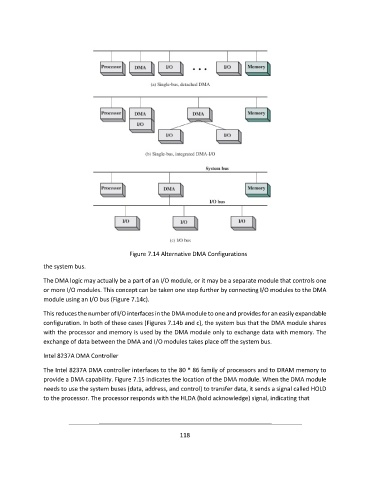
Figure 7.14 Alternative DMA Configurations
               the system bus.

               The DMA logic may actually be a part of an I/O module, or it may be a separate module that controls one
               or more I/O modules. This concept can be taken one step further by connecting I/O modules to the DMA
               module using an I/O bus (Figure 7.14c).

               This reduces the number of I/O interfaces in the DMA module to one and provides for an easily expandable
               configuration. In both of these cases (Figures 7.14b and c), the system bus that the DMA module shares
               with the processor and memory is used by the DMA module only to exchange data with memory. The
               exchange of data between the DMA and I/O modules takes place off the system bus.

               Intel 8237A DMA Controller

               The Intel 8237A DMA controller interfaces to the 80 * 86 family of processors and to DRAM memory to
               provide a DMA capability. Figure 7.15 indicates the location of the DMA module. When the DMA module
               needs to use the system buses (data, address, and control) to transfer data, it sends a signal called HOLD
               to the processor. The processor responds with the HLDA (hold acknowledge) signal, indicating that


                                                             118

