


Page 145 - Handout of Computer Architecture (1)..
P. 145
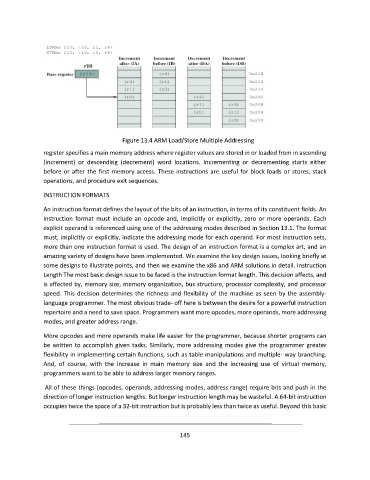
Figure 13.4 ARM Load/Store Multiple Addressing

               register specifies a main memory address where register values are stored in or loaded from in ascending
               (increment)  or  descending  (decrement)  word  locations.  Incrementing  or  decrementing  starts  either
               before or after the first memory access. These instructions are useful for block loads or stores, stack
               operations, and procedure exit sequences.

               INSTRUCTION FORMATS
               An instruction format defines the layout of the bits of an instruction, in terms of its constituent fields. An
               instruction  format must  include  an  opcode  and,  implicitly or  explicitly,  zero or  more operands.  Each
               explicit operand is referenced using one of the addressing modes described in Section 13.1. The format
               must, implicitly or explicitly, indicate the addressing mode for each operand. For most instruction sets,
               more than one instruction format is used. The design of an instruction format is a complex art, and an
               amazing variety of designs have been implemented. We examine the key design issues, looking briefly at
               some designs to illustrate points, and then we examine the x86 and ARM solutions in detail. Instruction
               Length The most basic design issue to be faced is the instruction format length. This decision affects, and
               is affected by, memory size, memory organization, bus structure, processor complexity, and processor
               speed. This decision determines the richness and flexibility of the machine as seen by the assembly-
               language programmer. The most obvious trade- off here is between the desire for a powerful instruction
               repertoire and a need to save space. Programmers want more opcodes, more operands, more addressing
               modes, and greater address range.

               More opcodes and more operands make life easier for the programmer, because shorter programs can
               be written to accomplish given tasks. Similarly, more addressing modes give the programmer greater
               flexibility in implementing certain functions, such as table manipulations and multiple- way branching.
               And,  of  course,  with  the  increase  in  main  memory  size  and  the  increasing  use  of  virtual  memory,
               programmers want to be able to address larger memory ranges.

                All of these things (opcodes, operands, addressing modes, address range) require bits and push in the
               direction of longer instruction lengths. But longer instruction length may be wasteful. A 64-bit instruction
               occupies twice the space of a 32-bit instruction but is probably less than twice as useful. Beyond this basic


                                                             145

