


Page 159 - Handout of Computer Architecture (1)..
P. 159
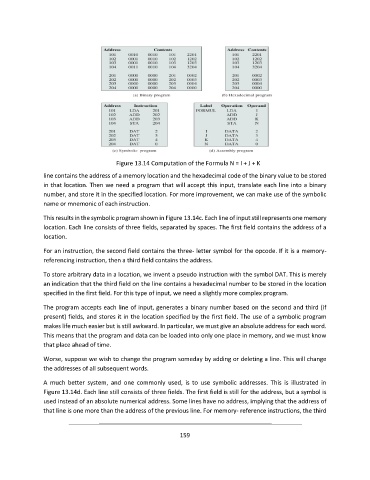
Figure 13.14 Computation of the Formula N = I + J + K

               line contains the address of a memory location and the hexadecimal code of the binary value to be stored
               in that location. Then we need a program that will accept this input, translate each line into a binary
               number, and store it in the specified location. For more improvement, we can make use of the symbolic
               name or mnemonic of each instruction.

               This results in the symbolic program shown in Figure 13.14c. Each line of input still represents one memory
               location. Each line consists of three fields, separated by spaces. The first field contains the address of a
               location.

               For an instruction, the second field contains the three- letter symbol for the opcode. If it is a memory-
               referencing instruction, then a third field contains the address.

               To store arbitrary data in a location, we invent a pseudo instruction with the symbol DAT. This is merely
               an indication that the third field on the line contains a hexadecimal number to be stored in the location
               specified in the first field. For this type of input, we need a slightly more complex program.

               The program accepts each line of input, generates a binary number based on the second and third (if
               present) fields, and stores it in the location specified by the first field. The use of a symbolic program
               makes life much easier but is still awkward. In particular, we must give an absolute address for each word.
               This means that the program and data can be loaded into only one place in memory, and we must know
               that place ahead of time.

               Worse, suppose we wish to change the program someday by adding or deleting a line. This will change
               the addresses of all subsequent words.

               A  much  better  system,  and  one  commonly  used,  is  to  use  symbolic  addresses.  This  is  illustrated  in
               Figure 13.14d. Each line still consists of three fields. The first field is still for the address, but a symbol is
               used instead of an absolute numerical address. Some lines have no address, implying that the address of
               that line is one more than the address of the previous line. For memory- reference instructions, the third


                                                             159

