


Page 157 - Handout of Computer Architecture (1)..
P. 157
instruction in both 16-bit and 32-bit formats. thumb- 2 instruction set with the introduction of the Thumb
               instruction set, the user was required to blend instruction sets by compiling performance critical code to
               ARM and the rest to Thumb. This manual code blending requires additional effort and it is difficult to
               achieve optimal results.

               To overcome these problems, ARM developed the Thumb- 2 instruction set, which is the only instruction
               set available on the Cortex- M microcontroller products. Thumb- 2 is a major enhancement to the Thumb
               instruction set architecture (ISA). It introduces 32-bit instructions that can be intermixed freely with the
               older 16-bit Thumb instructions. These new 32-bit instructions cover almost all the functionality of the
               ARM instruction set.

               The most important difference between the Thumb ISA and the ARM ISA is that most 32-bit Thumb
               instructions are unconditional, whereas almost all ARM instructions can be conditional. However, Thumb-
               2 introduces a new If- Then (IT) instruction that delivers much of the functionality of the condition field in
               ARM instructions. Thumb- 2 delivers overall code density comparable with Thumb, together with the
               performance levels associated with the ARM ISA. Before Thumb- 2, developers had to choose between
               Thumb for size and ARM for performance. [ROBI07] reports on an analysis of the Thumb- 2 instruction set
               compared  with  the  ARM  and  original  Thumb  instruction  sets.  The  analysis  involved  compiling  and
               executing the Embedded Microprocessor Benchmark Consortium (EEMBC) benchmark suite using the
               three instruction sets, with the following results:

               ■ With compilers optimized for performance, Thumb- 2 size was 26% smaller than ARM, and slightly larger
               than original Thumb.

                ■ With compilers optimized for space, Thumb- 2 size was 32% smaller than ARM, and slightly smaller than
               original Thumb.


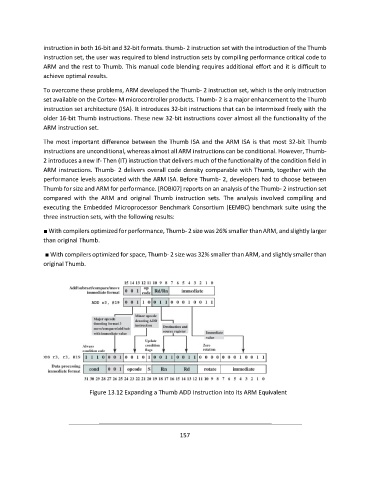
                               Figure 13.12 Expanding a Thumb ADD Instruction into its ARM Equivalent


                                                             157

