


Page 79 - Handout of Computer Architecture (1)..
P. 79
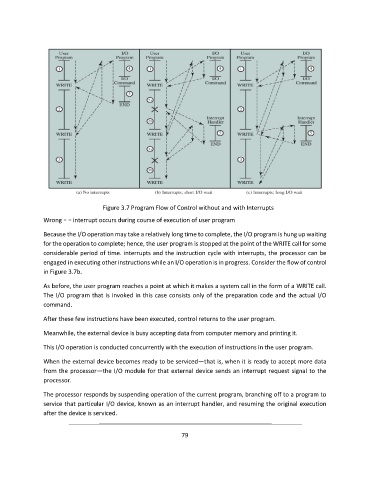
Figure 3.7 Program Flow of Control without and with Interrupts

               Wrong = = interrupt occurs during course of execution of user program

               Because the I/O operation may take a relatively long time to complete, the I/O program is hung up waiting
               for the operation to complete; hence, the user program is stopped at the point of the WRITE call for some
               considerable period of time. interrupts and the instruction cycle with interrupts, the processor can be
               engaged in executing other instructions while an I/O operation is in progress. Consider the flow of control
               in Figure 3.7b.

               As before, the user program reaches a point at which it makes a system call in the form of a WRITE call.
               The I/O program that is invoked in this case consists only of the preparation code and the actual I/O
               command.

               After these few instructions have been executed, control returns to the user program.

               Meanwhile, the external device is busy accepting data from computer memory and printing it.

               This I/O operation is conducted concurrently with the execution of instructions in the user program.

               When the external device becomes ready to be serviced—that is, when it is ready to accept more data
               from the processor—the I/O module for that external device sends an interrupt request signal to the
               processor.

               The processor responds by suspending operation of the current program, branching off to a program to
               service that particular I/O device, known as an interrupt handler, and resuming the original execution
               after the device is serviced.

                                                             79

