


Page 170 - 72193
P. 170
174
 ההגה
 די קרפ
                                              th
 םייח ץפח
 Chafetz Chayim  הרימשה תבוח סרטנוק  .י"ִשּׁרַ ,הֶז חָקִּמ תוֹנקְִל ץֵפָח יִתיִיָה וֹא   ."ךָיקֶלֹאֵמ ָתארֵָיְו" :)ז"י ה"כ ארָקְִיַּו( וֹבּ רַמֱאֶנ   ,ר ּ ֹכְמִל הָאוּבְתּ וֹל שֵׁיֶּשׁ רֵבוֹס יִתיִיָה .הָבוֹט םִא יִכּ יִתיִשָׂע   אלֹ ,רַמוֹל אוּה לוֹכָיֶּשׁ ,תוֹלּקְַלקֲַעַל וֹא לֵקַּעְל םִא ַעדֵוֹי   אוּה ,הֶשׂוֹע לֶשׁ וֹבִּלְל אָ
  Kuntres Chovat HaShemirah      הרימשה תבוח סרטנוק
 14  chapter                            בי קרפ
 th


 Chafetz Chayim              Chovat HaShemirah
                                      ב"י קרֶֶפּ
 th
 14 chapter
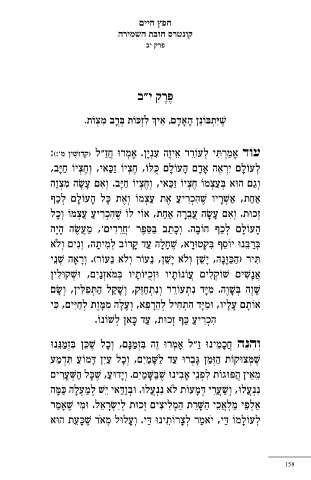
                        .תוְֹצִמ ברְֹבּ תוֹכְּזִל ךְיֵא ,םָדָאָה ןֵנוֹבְּתִיֶּשׁ
 In this chapter I will discuss some details and the
 laws regarding ten negative speech qualities that
 were discussed above.   :):'מ ןיִשׁוּדּקִ( ל"ַזֲח וּרְמָא .ןָיְנִע הֶזיֵא ררֵוֹעְל יִתּרְַמָא דוֹע
               ,בָיַּח וֹיְצֶחְו ,יאַכַּז וֹיְצֶח ,וֹלֻּכּ םָלוֹעָה םָדָא הֶארְִי םָלוֹעְל
 Up until this point we have spoken about these ten negative types    הָוְצִמ הָשָׂע םִאְו .בָיַּח וֹיְצֶחְו ,יאַכַּז וֹיְצֶח וֹמְצַעְבּ אוּה םַגְו
 of speech in a broad sense.  Now we will discuss the specific
 details of law that relate to them and we will explain them one    ףַכְל םָלוֹעָה לָכּ תֶאְו וֹמְצַע תֶא ַעירְִכִהֶשׁ וירְָשַׁא ,תַחַא
 by one.       לָכְו וֹמְצַע ַעירְִכִהֶשׁ וֹל יוֹא ,תַחַא הרֵָבֲע הָשָׂע םִאְו .תוּכְז

 Oppressive  language\  Abusive  language:  The  Gemara  Babba    הָיָה  הֶשֲׂעַמ  ,'םידִרֲֵח'  רֶפֵסַּבּ  בַתָכְו  .הָבוֹח  ףַכְל  םָלוֹעָה
 Metziah  (58b)  states  the  following:  “Just  as  there  is  abuse  \
 overcharging in the sale of merchandise, so too is there abuse    אלְֹו םיִנְו ,הָתיִמְל בוֹרקָ דַע הָלָחֶשׁ ,ארָוּטקְִבּ ףֵסוֹי וּנֵבּרְַבּ
 in matters of speech.  One should not ask him  (a storekeeper)    יֵנְשׁ הָארְָו .)רוֹעֵנ אלְֹו רוֹעֵנ ,ןֵשָׁי אלְֹו ןֵשָׁי ,הָנָוַּכַּה( ריִתּ
 “How much does that item cost” if one has no intention of buying
 it (because he is tricking the storekeeper into thinking that he may    ןיִלוּקְשׁוּ  ,םִיַנְזאֹמְבּ  ויָתוֹיֻּכְזוּ  ויָתוֹנוֲֹע  םיִלקְוֹשׁ  םיִשָׁנֲא
 buy it) and needlessly bothering him with words.  If someone is
 a Ba’al Teshuvah, one may not say to him “Do you remember    םָשְׂו ,ןיִלִּפְתַּה לקַָשְׁו ,קֵזַּחְתִנְו ררֵוֹעְתִנ דָיִּמ .הֶוָשְׁבּ הֶוָשׁ
 what you used to do (before you did Teshuvah).”  If he is the    יִכּ ,םיִיַּחְל תֶוָמִּמ הָלָעְו ,אֵפרֵָהְל ליִחְתִה דָיִּמוּ ,ויָלָע םָתוֹא
 son of a convert, one may not say to him “Do you remember
 what your fathers did,” as the pasuk states (Shemot 22:20) “Do   .וֹנוֹשְׁל ןאָכּ דַע ,תוּכְז ףַכּ ַעירְִכִה
 not oppress \ abuse a convert.”  This same law applies to a Jew
 whose family has a blemish (a “skeleton in their closet”).  It is    וּנֵנַּמְזִבּ ןֵכֶּשׁ לָכְו ,םָנַּמְזִבּ הֶז וּרְמָא ל"ַז וּניֵמָכֲח הֵנִּהְו
 forbidden to humiliate him because of something his family \ (his
 fathers) did.  All this is forbidden even if the speaker’s remarks    עַמדְִתּ ַעוֹמָדּ ןִיַע לָכְו ,םִיַמָשַּׁל דַע וּרְבָגּ ןַמְזַּה תוֹקוּצְמֶּשׁ
 are made privately.  If the remarks are made publicly, the speaker    םירִָעְשַּׁה לָכֶּשׁ ,ַעוּדָיְו .םִיַמָשַּׁבֶּשׁ וּניִבָא יֵנְפִל תוֹגוּפֲה ןיֵאֵמ
 incurs an additional sin of embarrassing someone publicly, as I
 will soon write.  The gemara states the following (Gemara Babba    הָמַּכּ הָלְעַמְל שֵׁי יאַדַּוְבוּ .וּלֲעְנִנ אלֹ תוֹעָמְדּ ירֲֵעַשְׁו ,וּלֲעְנִנ
 Metziah  58b):  “Our  sages  taught  (Vayikrah  25:17)  ‘One  may    רַמָאֶשׁ יִמוּ .לֵארְָשִׂיְל תוּכְז םיִציִלְמַה תרֵָשַּׁה יֵכֲאְלַמ יֵפְלַא
 not  oppress  his  fellow  Jew;”  that  pasuk  is  referring  to  verbal
 “abuse” \ “oppression.”  Do you say that “abuse” \ “oppressive    אוּה תֵעָכֶּשׁ דֹאְמ לוּלָעְו .יַדּ וּניֵתוֹרָצְל רַמאֹי ,יַדּ וֹמָלוֹעְל


 171                                                                          158

