


Page 236 - 72193
P. 236
240
 .תאֵמְטִנ -
 א קרפ
                                              Preface
 םייח ץפח
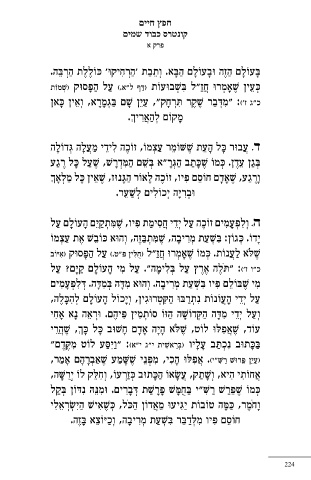
 Chafetz Chayim  םימש דובכ סרטנוק  .ץוּחַל ל ּ ֹכַה הֶחדְִנ ,דַחַי ּ ְב הָאְמ ּ ֻטַה ירְֵבדְִו הָשּׁדֻ ּ קְַה ירְֵב ּ דִ   ץרֶֶשַּׁה הּ ּ ָב עַגָנ רֶשֲׁא ּ ַכ ,הָמוּרְת ּ דִ אָיְמ ּ דֻ אוּהְו .)שׁוֹד ּ קַָה ַח ּ ֹכַה   שָׁלְחֶנ לוֹכָיְבִכְו ,הָשּׁדֻ ּ קְַה רַבדְ ּ ִב ,וֹבּ הֶכוֹז םָדָאָה ןיֵאְו .אוּהַה   שׁוֹד ּ קַָה רוּבּ ּ דִַה
  Kuntres Kevod Shamayim          םימש דובכ סרטנוק
 1  chapter                              א קרפ
 st
 important to be careful to avoid this bitter sin that causes the    .ה ֵּברְַה תֶלֶלוֹכּ 'וּקיִחרְַה' תַבֵתְו .א ָּבַה םָלוֹעָבוּ הֶּזַה םָלוֹע ָּב
 Shehchinah to leave, Gd forbid.
               תוֹמְשׁ( קוּס ָּפַה לַע ).א"ל ף ּדַ( תוֹעוּבְשׁ ִּב ל"ַזֲח וּרְמָאֶשׁ ןיֵע ְּכ
 [ 14 ]  (Emphatically) How so very important it is to be careful    ןא ָּכ ןיֵאְו ,ארָָמְּג ַּב םָשׁ ןֵּיַע ,"קָחרְ ִּת רקֶֶשׁ רַב ּדְִמ" :)'ז ג"כ
 to avoid this sin is taught by Chazal in a statement that is well
 known to all (Yerushalmi Yomah 5a), that in every generation in   .ךְירֲִאַהְל םוֹקָמ
 which the Beit HaMikdash was not built in its time is considered,
 Gd forbid, as if it was a partner to its destruction; as is known
 that this sin was the prime reason for the destruction of the Beit    הָלוֹדְּג הָלֲעַמ ידֵיִל הֶכוֹז ,וֹמְצַע רֵמוֹשֶּׁשׁ תֵעָה ל ָּכ רוּבֲע .ד
 HaMikdash.    עַגרֶ ל ָּכ לַעֶשׁ ,שׁרָדְ ִּמַה םֵשׁ ְּב א"רְָּגַה בַת ָּכֶשׁ וֹמ ְּכ .ןדֵֶע ןַג ְּב

 [ 15 ]  Contained within the will of Rebbe Eliezer the Great is    ךְָאְלַמ ל ָּכ ןיֵאֶשׁ ,זוּנָּגַה רוֹאָל הֶכוֹז ,וי ִּפ םֵסוֹח םָדָאֶשׁ ,עַגרֶָו
 the  following  instruction  to  his  son  Hurkanos:  “Do  not  sit  in   .רֵעַשְׁל םיִלוֹכְי הָּירְִבוּ
 the company of those people who speak disparagingly of their
 fellow Jew, because when their words ascend On High they are
 inscribed in a book and everyone who was assembled within that    לַע םָלוֹעָה םֵּיקְַת ִּמֶשׁ ,וי ִּפ תַמיִסֲח ידְֵי לַע הֶכוֹז םיִמָעְפִלְו .ה
 group is recorded as being part of an evil group of people (even
 if they are passive and don’t participate in the conversation.  The    וֹמְצַע תֶא שֵׁבוֹכּ אוּהְו ,הֶּז ַּבְת ִּמֶשׁ ,הָבירְִמ תַעְשׁ ִּב :ןוֹג ְּכ .וֹדָי
 mere  act  of  standing  in  that  group  is  enough  to  characterize    בוֹיִּא( קוּס ָּפַה לַע ).ט"פ ןי ִּלֻח( ל"ַזֲח וּרְמָאֶשׁ וֹמ ְּכ .תוֹנֲעַל אלֶֹּשׁ
 this  person  as  a  ‘Rasha’).      With  absolute  certainty,  a  spirit
 of  awesome  defilement  hovers  over  this  entire  group  and  the    לַע ?םָּיקַ םָלוֹעָה יִמ לַע ."הָמיִל ְּב לַע ץרֶֶא הֶל ֹּת" :)'ז ו"כ
 Yetzer Hara incites everyone in that group to participate in that    םיִמָעְפִל ּדְ .ה ָּדִמ ְּב ה ָּדִמ אוּהְו .הָבירְִמ תַעְשׁ ִּב וי ִּפ םֵלוֹבֶּשׁ יִמ
 conversation with various stories (i.e., Lashon Hara) in order that
 every person in that group will be judged at some future time to    ,הֶל ָּכִהְל םָלוֹעָה לוֹכָיְו ,ןיִגוּרְט ּקִַה וּבּרְַתִנ תוֹנוֲֹעָה ידְֵי לַע
 receive a profound (horrible) punishment together with all of his    יִחָא אָנ הֵארְוּ .םֶהי ִּפ ןיִמְתוֹס וֹזַּה הָשׁוֹד ּקְַה ה ָּדִמ ידְֵי לַעְו
 companions.  All this is derived from a well-known Mishnah (in
 Gemara Makkot 5b) One who is attached (in any way at all) to a    ירֲֵהֶשׁ ,ךְ ָּכ ל ָּכ בוּשָׁח םָדָא הָיָה אלֶֹּשׁ ,טוֹל וּלִּפֲאֶשׁ ,דוֹע
 group of sinners will be punished just the same as those sinners.     "םדֶ ּקִֶמ טוֹל ע ַּסִּיַו" :)א"י ג"י תיִשׁארֵ ְּב( ויָלָע ב ַּתְכִנ בוּת ָּכ ַּב
 Therefore anyone who has any sense will run away from these
 kinds of people just as he would run away from a fire.   ,רַמָא םָהרְָבַאֶשׁ עַמָשֶּׁשׁ יֵנ ְּפִמ ,יִכָה וּלִּפֲא .)י"ִשּׁרַ שׁוּר ֵּפ ןֵּיַע(
               ,הָשּׁרְֻי וֹל ק ֵּלִחְו ,וֹערְַז ְּכ בוּת ָּכַה וֹאָשֲׂע ,קַתָשְׁו ,איִה יִתוֹחֲא
 [ 16 ]  The Tosefta (Peh’ah 1:2) (cited in the Yerushalmi Peh’ah
 1:1)  contains  the  following  statement  which  is  also  quoted  in    לקַ ְּב ןוֹדִּנ הֵּנִּמוּ .םירִָב ּדְ תַשׁרָ ָּפ שׁ ָּמֻח ַּב י"ִשּׁרַ שׁרַ ֵּפֶשׁ וֹמ ְּכ
 Sefer Mitzvot Gadol (SeMag Lav #9).  Payment is exacted in this    יִלֵארְְשִּׂיַה שׁיִאֶשׁ ְּכ ,ל ֹּכַה ןוֹדֲאֵמ וּעיִּגַי תוֹבוֹט ה ָּמ ַּכ ,רֶמֹחָו
 world for three sins while the principal punishment is left for Olam
 Haba.  These are the three sins:  Idol worship, forbidden intimate   .הֶז ָּב אֵצוֹיַּכְו ,הָבירְִמ תַעְשׁ ִּב ר ֵּבדַ ְּלִמ וי ִּפ םֵסוֹח


 233                                                                          224

