


Page 568 - Atlas Sea Birds Ver1
P. 568
There may  be movement of  birds between colonies in
                                                                    Algoa Bay both within and between years (Martin 2019).
                                                                    A chick ringed at Cape Recife in December 2001 was
                                                                    found  breeding  at  the Alexandria  Dunefields  in  February
                                                                    2010, when aged c. 9 years (Whittington et al. 2015). Braby
                                                                    (2011) thought that 21–31 pairs of Damara Terns nested
                                                                    in the Eastern Cape in 2010, which increased to c. 43 pairs
                                                                    in 2018–2021 (Table 2).
                                                                      In Algoa Bay, Eastern Cape, a maximum of 113 adult
                                                                    Damara Terns was  counted at Schelmhoek on 4 January
                                                                    2019 and there were 56 adults at other active colonies in
                                                                    Algoa Bay during the period late December 2018 to early
                                                                    January 2019, giving a potential maximum of 169 mature
                                                                    individuals.  On  6  February  2019  there  were  126  birds,
                                                                    including a minimum of 11 juveniles, along the Alexandria
                                                                    coastline  (AP  Martin  unpubl.).  With  just  9–10  pairs  of
                                                                    Damara Terns breeding elsewhere in South Africa, there
                                                                    are unlikely to  be more than 200 mature individuals  in
                                                                    South Africa.

                                                                    Population trend and conservation status

                                                                    In the late 1970s c. 150 pairs of Damara Terns bred in South
                                                                    Africa  (Cooper  et  al.  1984).  Underhill  (2000)  estimated
                                                                    c. 100 pairs and Braby (2011) estimated 65–146 pairs, of
                                                                    which the majority (44–115 pairs) were in the Northern and
                                                                    Western Cape (Table 2). Crawford et al. (2012) estimated
                                                                    just 36 pairs breeding in South Africa. In 2018–2021 there
                                                                    were an estimated 52 pairs breeding in South Africa with all
                                                                    but 9 pairs from the Eastern Cape (Table 2).
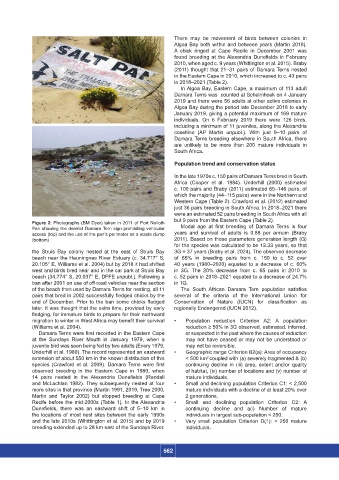
                  Figure 2. Photographs (BM Dyer) taken in 2011 of Port Nolloth
                  Pan showing the derelict Damara Tern sign prohibiting vehicular   Modal  age  at  first  breeding  of  Damara  Terns  is  four
                  access (top) and the use of the pan’s perimeter as a waste dump   years  and  survival  of  adults  is  0.88  per  annum  (Braby
                  (bottom)                                          2011). Based on these parameters generation length (G)
                                                                    for the species was calculated to be 12.33 years, so that
                  the Struis Bay colony nested at the east of Struis Bay   3G = 37 years (Braby et al. 2024). The observed decrease
                  beach near the Heuningnes River Estuary (c. 34.717° S,   of 65% in breeding  pairs from c. 150 to c. 52 over
                  20.105° E, Williams et al. 2004) but by 2018 it had shifted   40  years  (1980–2020)  equated  to  a  decrease  of  c.  60%
                  west and birds bred near and in the car park at Struis Bay   in 3G.  The 20%  decrease  from c. 65 pairs  in 2010  to
                  beach (34.774° S, 20.037° E, DFFE unpubl.). Following a   c. 52 pairs in 2018–2021 equated to a decrease of 24.7%
                  ban after 2001 on use of off-road vehicles near the section   in 1G.
                  of the beach then used by Damara Terns for nesting, all 11   The  South  African  Damara  Tern  population  satisfies
                  pairs that bred in 2002 successfully fledged chicks by the   several  of  the  criteria  of  the  International  Union  for
                  end  of  December.  Prior  to  the  ban  some  chicks  fledged   Conservation  of  Nature  (IUCN)  for  classification  as
                  later. It was thought that the extra time, provided by early   regionally Endangered (IUCN 2012).
                  fledging, for immature birds to prepare for their northward
                  migration to winter in West Africa may benefit their survival   •   Population  reduction  Criterion  A2:  A  population
                  (Williams et al. 2004).                               reduction ≥ 50% in 3G observed, estimated, inferred,
                     Damara Terns were first recorded in the Eastern Cape   or suspected in the past where the causes of reduction
                  at  the  Sundays  River  Mouth  in  January  1979,  when  a   may not have ceased or may not be understood or
                  juvenile bird was seen being fed by two adults (Every 1979,   may not be reversible.
                  Underhill et al. 1980). The record represented an eastward   •   Geographic range Criterion B2(a): Area of occupancy
                  extension of about 550 km in the known distribution of this   < 500 km coupled with (a) severely fragmented & (b)
                                                                                2
                  species  (Crawford  et  al.  2009).  Damara Terns  were  first   continuing  decline  in  (iii)  area,  extent and/or  quality
                  observed  breeding  in  the  Eastern  Cape  in  1980,  when   of habitat, (iv) number of locations and (v) number of
                  14  pairs  nested  in  the  Alexandria  Dunefields  (Randall   mature individuals.
                  and McLachlan 1982). They subsequently nested at four   •   Small and declining population Criterion C1: < 2,500
                  more sites in that province (Martin 1991, 2019, Tree 2000,   mature individuals with a decline of at least 20% over
                  Martin  and  Taylor  2002)  but  stopped  breeding  at  Cape   2 generations.
                  Recife before the mid-2000s (Table 1). In the Alexandria   •   Small  and  declining  population  Criterion  C2:  A
                  Dunefields,  there  was  an  eastward  shift  of  5–10  km  in   continuing  decline and a(i) Number of mature
                  the locations of most nest sites between the early 1990s   individuals in largest sub-population < 250.
                  and the late 2010s (Whittington et al. 2015) and by 2019   •   Very  small  population  Criterion  D(1):  <  250  mature
                  breeding extended up to 28 km east of the Sundays River.   individuals.


                                                                562

